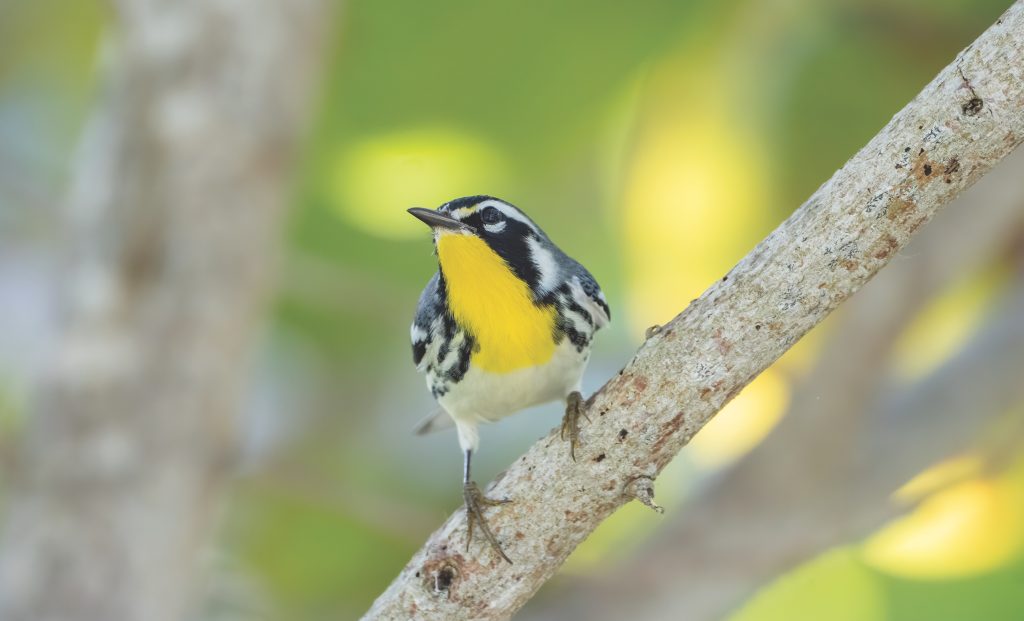
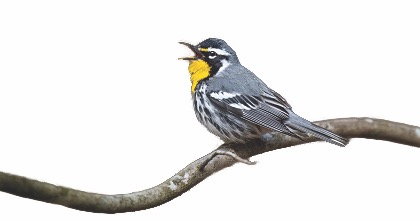
One of the earliest sounds of spring in eastern North Carolina is the song of the yellow-throated warbler. Returning from the northern Caribbean and the east coast of Mexico, males can be heard on territories in the treetops by mid-March, well before many other migrants have even crossed the gulf.
This little bird sports a gray back, white belly and wing bars with a black mask and, yes, a bright yellow throat. The canary color actually extends to the upper breast, so it is hard to miss. Individuals also have noticeable black streaks along the flanks.
Yellow-throated warblers can be found in a variety of open forests, although they prefer bottomland pines and cypress. They will also use hardwoods as long as water is close by — anything from a hazard on a golf course to a retention pond or even a major waterway. They have a definite affinity for wet habitat year-round.
The best way to find yellow-throateds is to listen for their sing-songy vocalizations coming from high in the canopy. Once you become acquainted with their sound, you may find that they are quite common in many spots from late March through early May. Once territories are established and the birds pair up and eggs are laid, males will not spend as much time singing. Both parents will be busy feeding nestlings and then head off as soon as the youngsters fledge. Having only one brood, reproduction is fast-paced for this species. New families may be tough to spot since nests are usually concealed in needles or Spanish moss on the ends of high branches.
Yellow-throated warblers forage along the trunks and larger branches of the trees where they are found, behaving more like brown creepers or their black and white warbler cousins. On the lookout for insects, yellow-throateds inspect the bark and leaves as well as any nook or cranny in the treetops.
Interestingly, hardier individuals have been documented here in the colder months. In winter, yellow-throateds not only feed on insects attracted to a variety of blooming plants, but to the nectar of those inflorescences as well. Along our Southern coast, you might even be surprised by one at the sugar water feeder left up for wintering hummingbirds.
Should you be lucky enough to spot one of these handsome yellow-throateds, please let me know right away.