By Harris Vaughan • Photographs by Meridith Loughlin
The windows were still boarded when Chris and Beth Collier first entered the old Tayloe Hospital with flashlights. In the darkness, their beams caught glimpses of what others saw as a list of demolition items. Drop ceilings sagging. Asbestos warnings posted. Old patient rooms abandoned with no sign of life. But where Washington residents saw a teardown, the Colliers saw potential.
“Thank God we were young enough and crazy enough to just leap first without thinking it through completely,” Beth says now, sitting in what was once the second-floor recovery ward of the 1900s hospital. Sunlight streams through windows that haven’t been boarded for years, illuminating a space that feels like a New York City loft yet deeply, unmistakably Southern.

This is where vanCollier creates furniture that ships all over the world from a building where Beth’s grandmother died and Chris’ grandfather threw surgical scalpels at interrupting colleagues — where half the town was either born or broken and mended. The Colliers haven’t just renovated a building, they’ve resurrected a community touchstone, transforming it into something entirely unexpected: a laboratory for the living where the past resets the present and simplicity sets trends.
The transformation reads like a meditation on seeing things differently. Where others might sanitize history, the Colliers embraced it. The third floor, once an operating theater, now serves as their studio — no HVAC, just windows thrown open to let in the sounds of the neighborhood. Dogs barking. People chatting. The rhythm of a small eastern North Carolina town going about its business. Paint fumes mix with sawdust. Their son Beck, who is autistic and non-verbal, primes frames with careful precision. This is not a sterile surgical theater; it’s a working design studio where beauty emerges from function and limitations become inspiration.
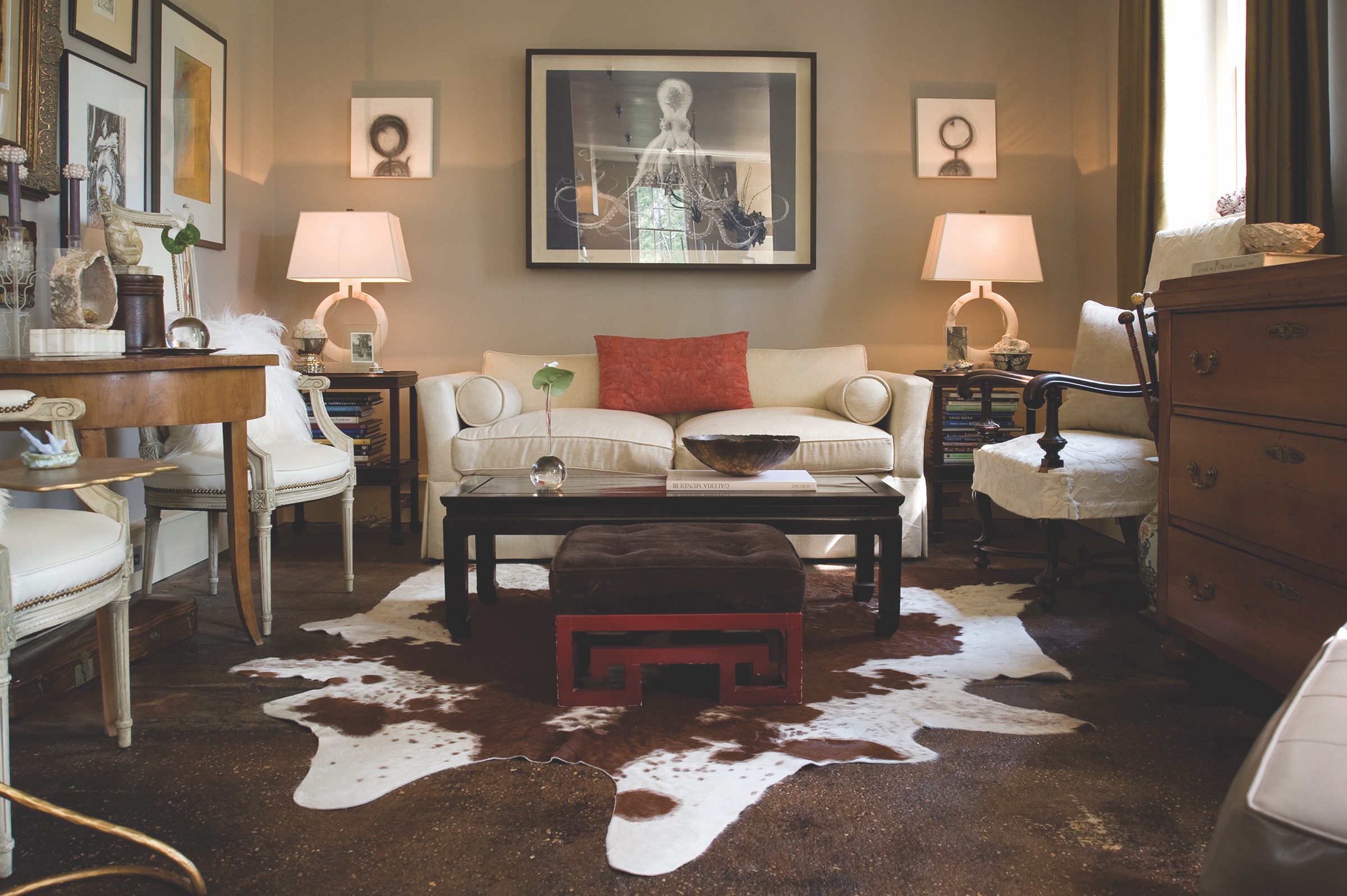
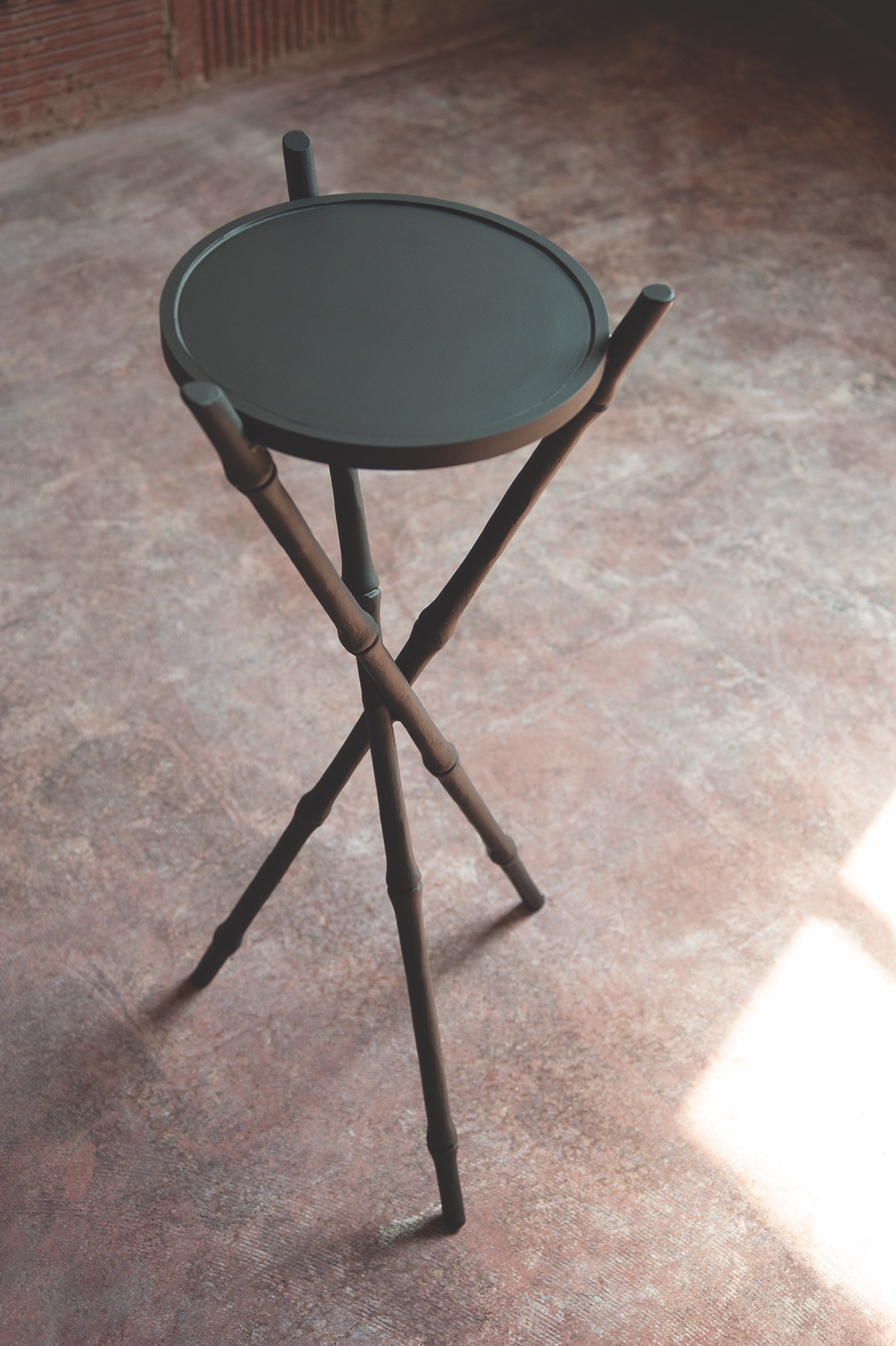
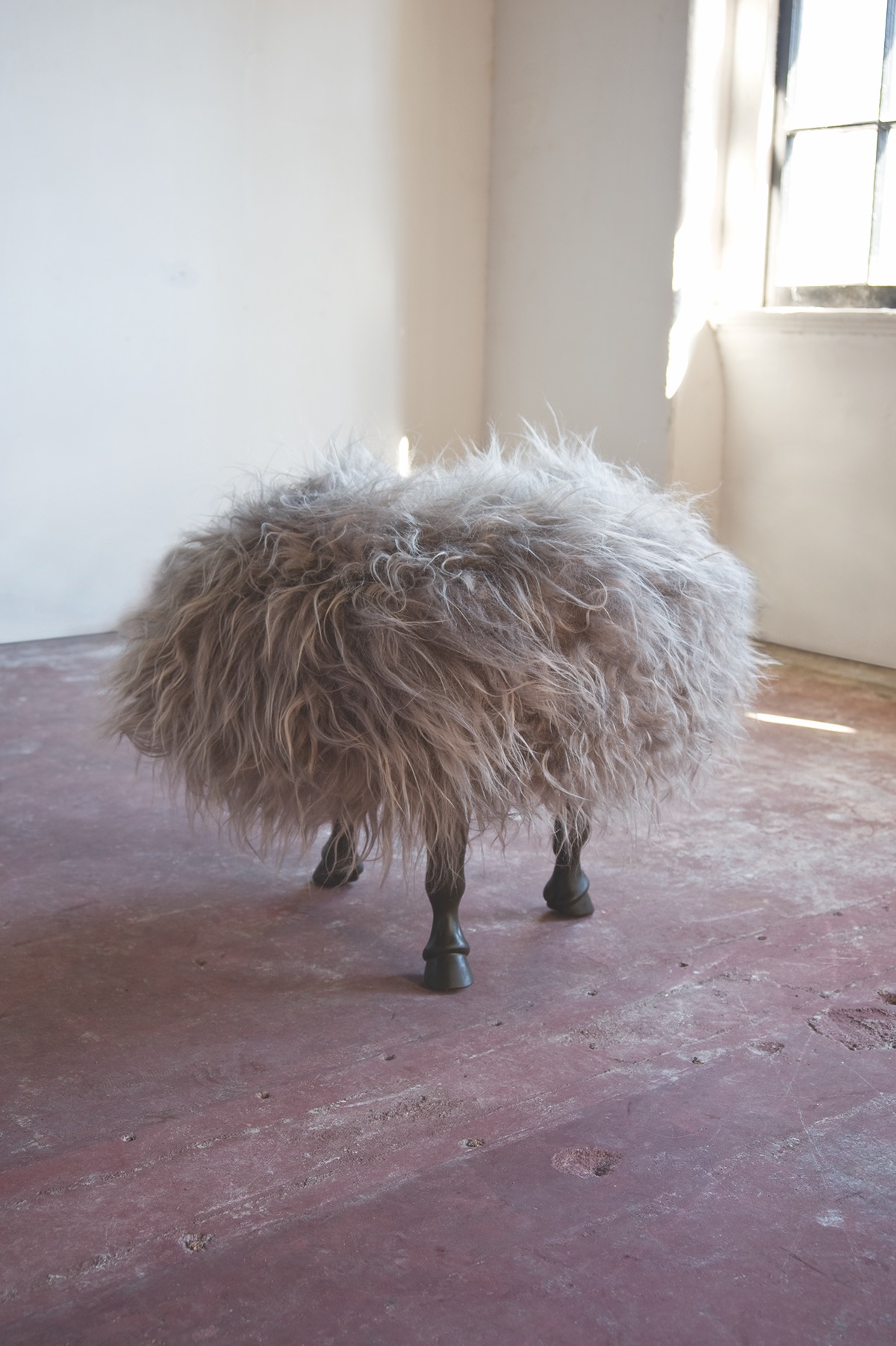
“Living in this building has inspired us as far as how we can draw a chair or make a chair and think about how it’s going to fit in your space,” Chris says. Every material choice matters when it comes to their aesthetic: clean lines, multiple uses, timeless forms that work as well in a California mansion as they do in their own converted hospital apartment.
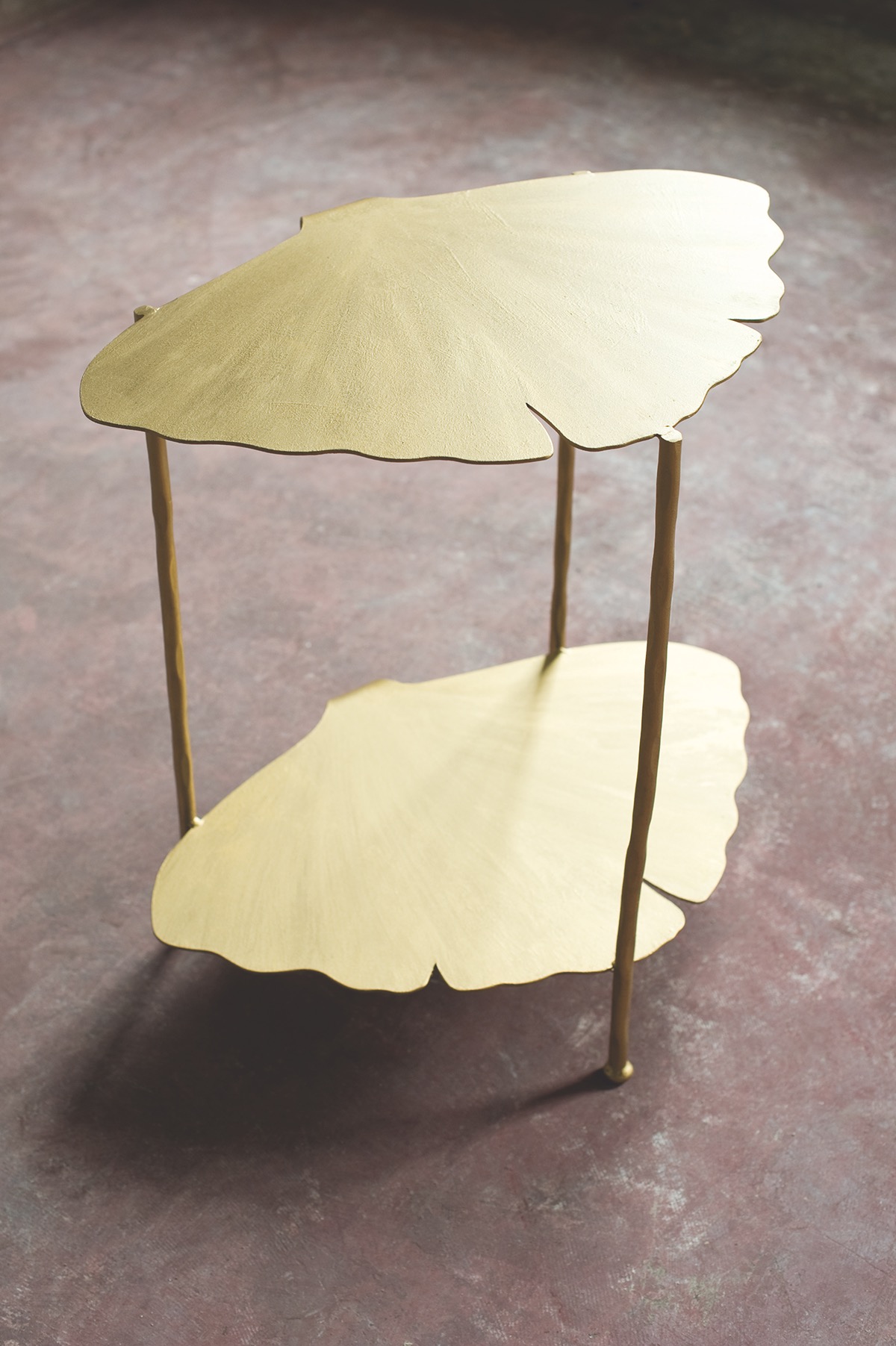
The story of one of their most successful pieces captures this chemistry of material and vision. Chris sketched it in seconds — a demilune table called the Hulot, so simple it barely seemed worth noting. But Beth, with her art history eye, saw what others might miss: elegance in simplicity, versatility in restraint.
“Interior designers are buying it and saying, ‘Oh my God, I can put it anywhere,’” Beth says. The table can wear wood, stone or glass on top. It can grow taller or shorter, wider or narrower. In a world of overwrought design, the understated Hulot table refuses to shout.
The Colliers’ gift is transforming the overlooked into the essential. Where generations of farmers saw tobacco sticks as nothing more than workhorse pieces of wood, the Colliers saw frames. Those same sticks that once cured tobacco in a grandfather’s warehouse before finding their way to the burn pile ship to Turkish lighting designers, to Brooklyn lofts, to anywhere people hunger for authentic materials with stories that, in some cases, even carry the scent of authenticity.
“Just to think about looking at those tobacco sticks aging in an old warehouse and then now we’re shipping them to a Turkish guy — it’s just mind-boggling,” Chris says. “I do think we have the capability to see beyond what’s in front of us a lot of times.”
The building itself tells this story of transformation. Local visitors arrive with memories. Births. Surgeries. Final visits with grandparents. “I was born in that room over there,” one elderly man told them. “This is where your grandfather removed my tonsils,” said another. Rather than feeling burdened by this history, the Colliers see themselves as stewards of collective memory, honoring the past while creating a new present.
Their approach to business mirrors their approach to renovation — patient, organic, trusted. When a woman from the Bahamas called to say she was standing in their living room while they were away at market, they weren’t alarmed but amused. This is how community works in small towns — on openness and the radical idea that good things are often just discovered.
“I was worried that in a lot of small towns, people don’t like change,” Beth says of the early days. Instead, they found support, curiosity and, eventually, pride. By saving the building everyone expected them to demolish, by creating opportunities for local craftsmen, by proving that world-class design can emerge from a town most people call “Little” Washington, they’ve become more than furniture makers. They’re proof that you can create a global business without losing your local soul.
Evidence of their impact is obvious. House & Garden UK discovered their pagoda lantern and called it “a sketch in the sky.” Architectural Digest followed, stunned that such sophistication could emerge from rural North Carolina. High Point furniture makers drive hours to see their studio, trying to understand their “ways.” But the Colliers’ way isn’t complicated — it’s just countercultural in its patience, specificity and locality.
“You can make it work if you want to, wherever you live,” Beth says. “You just have to push through. You have to have faith in what you’re doing, too.”

Beck makes his way to the third-floor studio, ready for another day of work in the place his parents created — a place where his limitations don’t define him, where he has purpose and belonging. The morning sun catches the stack from yesterday’s work, the proof of progress. Somewhere in New York, a designer unwraps a new Hulot table, running her fingers over its simple curves, probably never imagining it was conceived in seconds and built in a former operating room by people who see treasures where others see teardowns.
The Colliers work on, surrounded by their antiques and prototypes, their sketches and dreams. Outside, Washington goes about its business, a quiet and distinctly Southern river town overlooked by most of the world. Inside, in their laboratory of living, Chris and Beth continue their experiment in transformation — turning discarded materials into coveted furniture and proving that the best design often comes from the most unexpected places.
“We feel very blessed that we live and work, play, eat, sleep, drink here,” Chris says, surveying their domain. In the old hospital, once destined for the scrap heap, they’ve created more than furniture. They’ve created a way of living that honors the past and builds the future, salvaged one piece at a time.