By Samuel B. Dixon
Photographs by Trey Thomas
Located in rural Halifax County, the community of Tillery feels suspended in time. While many rural landscapes across North Carolina are facing unprecedented growth and development, much of Halifax County — and especially Tillery — remains significantly unchanged. This reverence for preserving the past is precisely what makes The Hermitage, a Federal-style house built in 1793 by Whitmell Hill, a colonel in the Revolutionary War and a delegate to the Second Continental Congress, uniquely notable.
Col. Hill, who was reported to have one of the largest fortunes in Colonial North Carolina, built The Hermitage for his son, Thomas Blount Hill. The house and farm were purchased in 1842 by John Tillery, a wealthy cotton planter, and it has remained in the Tillery family for multiple generations since. Today, The Hermitage is the home of Charles and Mary Tillery and has been for nearly 50 years. It is listed in the National Register of Historic Places as The Hermitage, but the Tillery family refers to the property as Glen Burnie, meaning secluded valley, in honor of their Scottish heritage.
Charles Tillery is deeply connected to the house and land where he grew up visiting his grandparents. He fondly remembers his grandfather, Junius Tillery, riding his horse and buggy throughout the plantation. In 1976, the nation’s bicentennial year, Charles purchased the house and the surrounding acreage from his cousins and set about a major restoration. He is the fifth generation of his family to live at The Hermitage. He and his wife, Mary, raised their two children there, and today their grandchildren represent the seventh generation of Tillery descendants to enjoy The Hermitage.
The children spend their weekends just as their parents did, exploring the woods and ponds and playing in the collection of outbuildings. Over the years, Charles and Mary have steadily acquired adjoining parcels of land, continually expanding and protecting the acreage surrounding The Hermitage and preserving its remarkable sense of complete isolation.
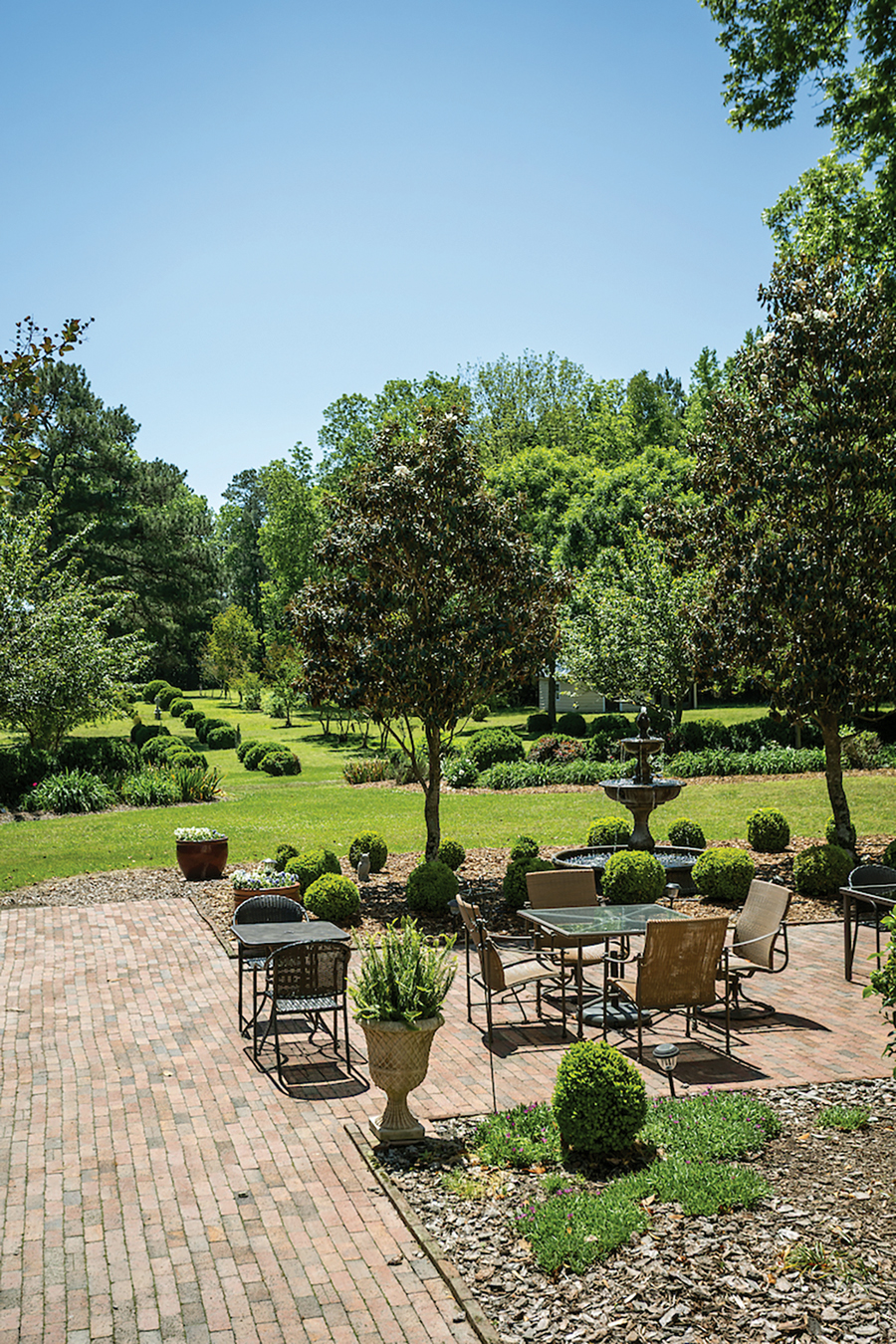
At The Hermitage, architecture, stewardship, and personal hospitality converge with rare authenticity. Charles Tillery speaks with an accent, softened by echoes of Southside Virginia, a vernacular that was once prevalent in Halifax County. Mary Tillery, a multi-talented interior and garden designer, has used her sense of design to create gardens that mirror the beauty and spirit of the house itself. Her plantings seem to emerge naturally from the landscape, adding softness and mystery to the entire property. Her gardens beautifully complement the structures and the family cemetery, evoking the feeling that in this place, one is stepping back in time.
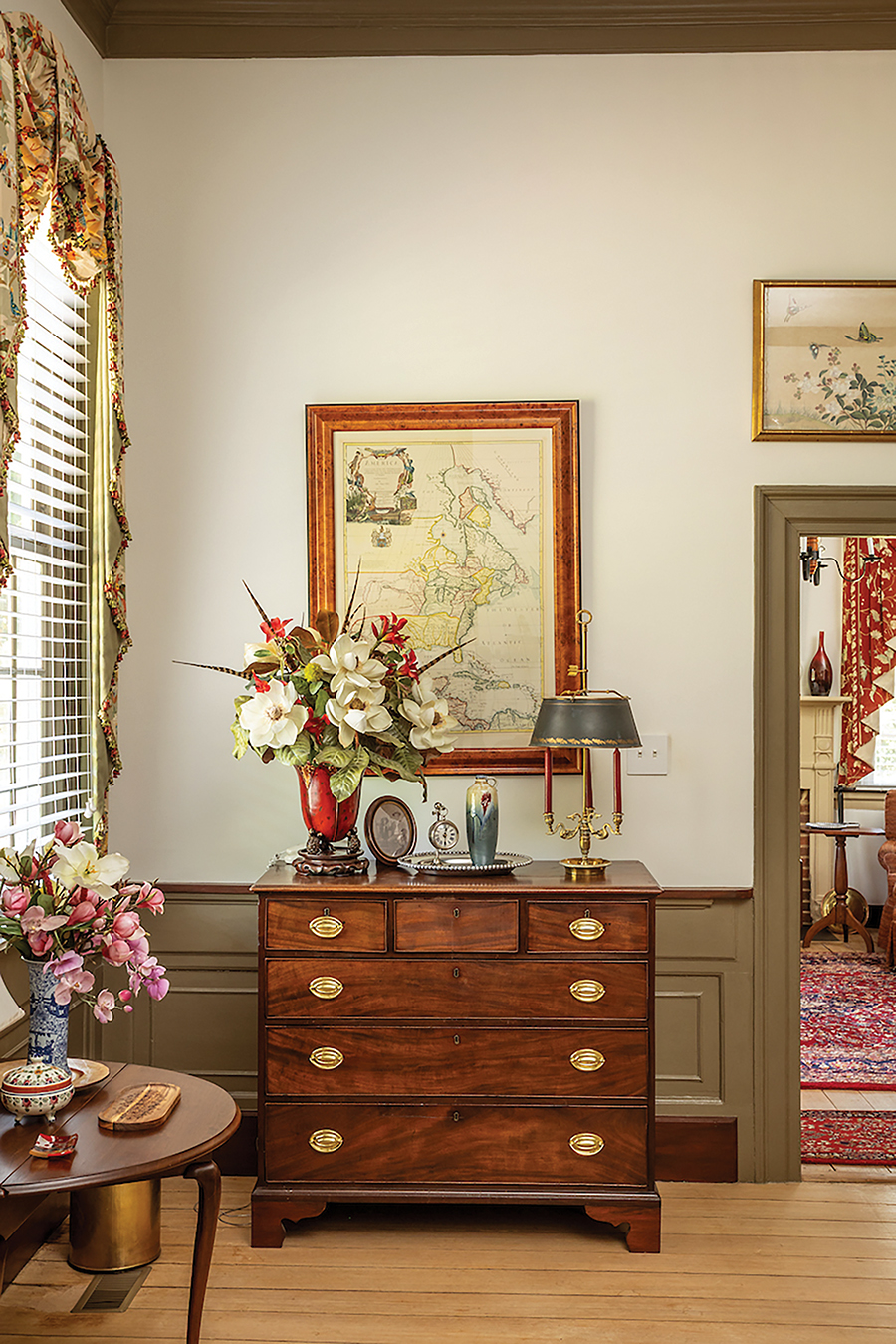
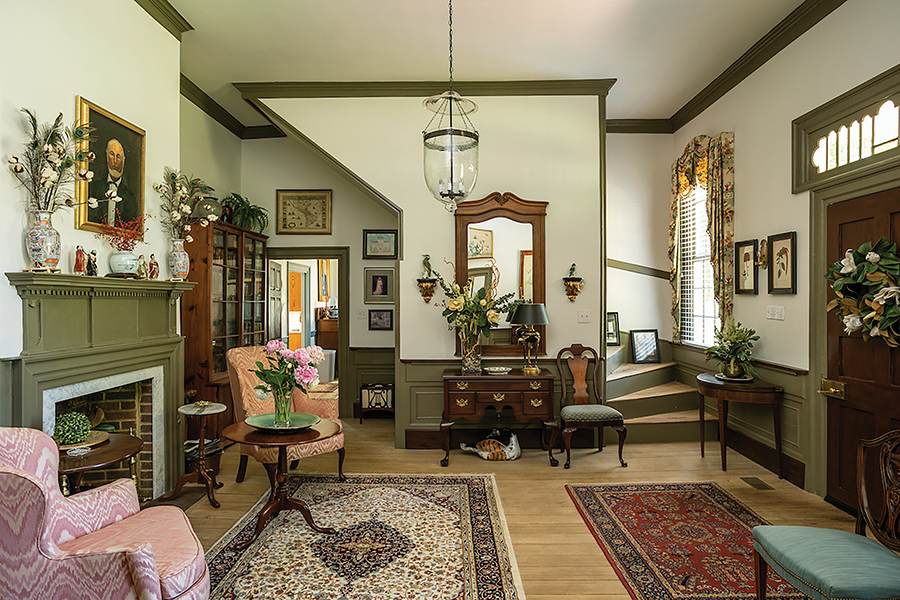
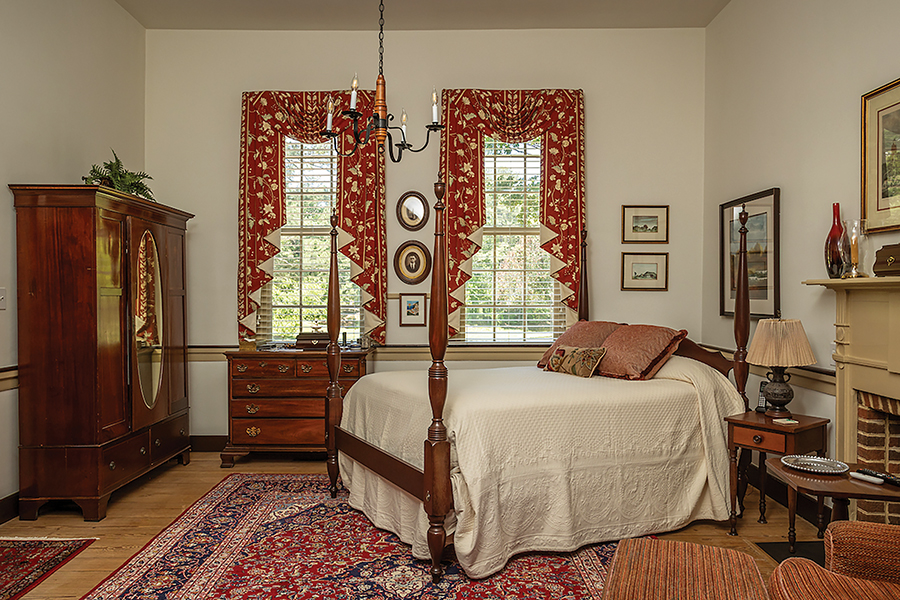
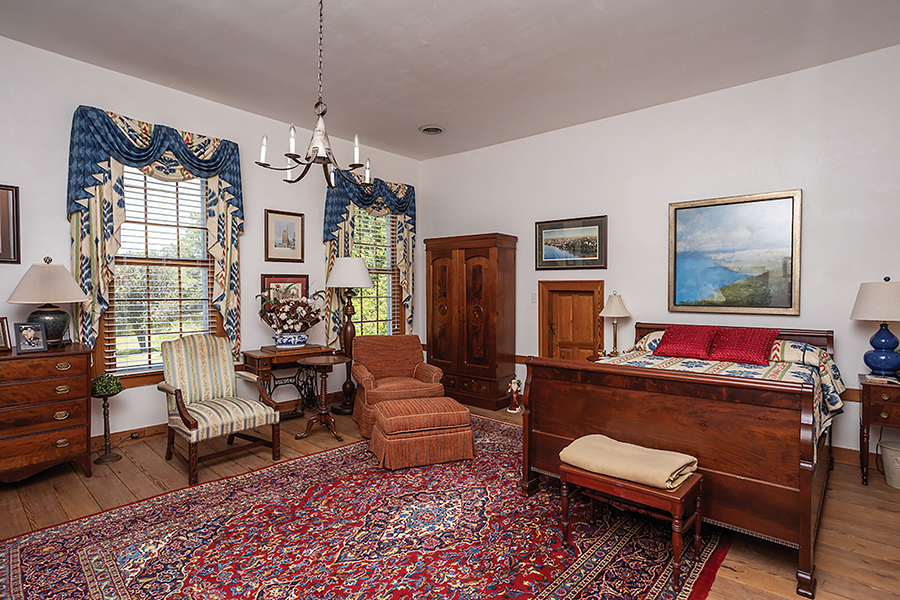
Charles and Mary have carried out their restoration with research, restraint and care. The house retains the feel and the atmosphere of age while accommodating modern comforts that are barely noticeable. The heart pine floors are perfectly patinaed from two centuries of use, and the first floor has soaring 13-foot ceilings, giving the principal rooms a gracious feeling. The sophistication of lavish and rare architectural carvings makes one expect to see Thomas Jefferson himself emerge from an adjoining room.
Architecturally, the house may be the finest surviving example of a tripartite house in North Carolina. The tripartite style, radical for its time, divided the home into three connected sections, with a large rear wing forming a T-shaped floor plan. Inside the home, exuberant and hauntingly beautiful mantels, woodwork, moldings and wainscoting elevate the rooms and lend them an almost theatrical quality. The elegant house, though not immense in scale, achieves a near-perfect balance of proportion and form, making it seem larger than it really is.
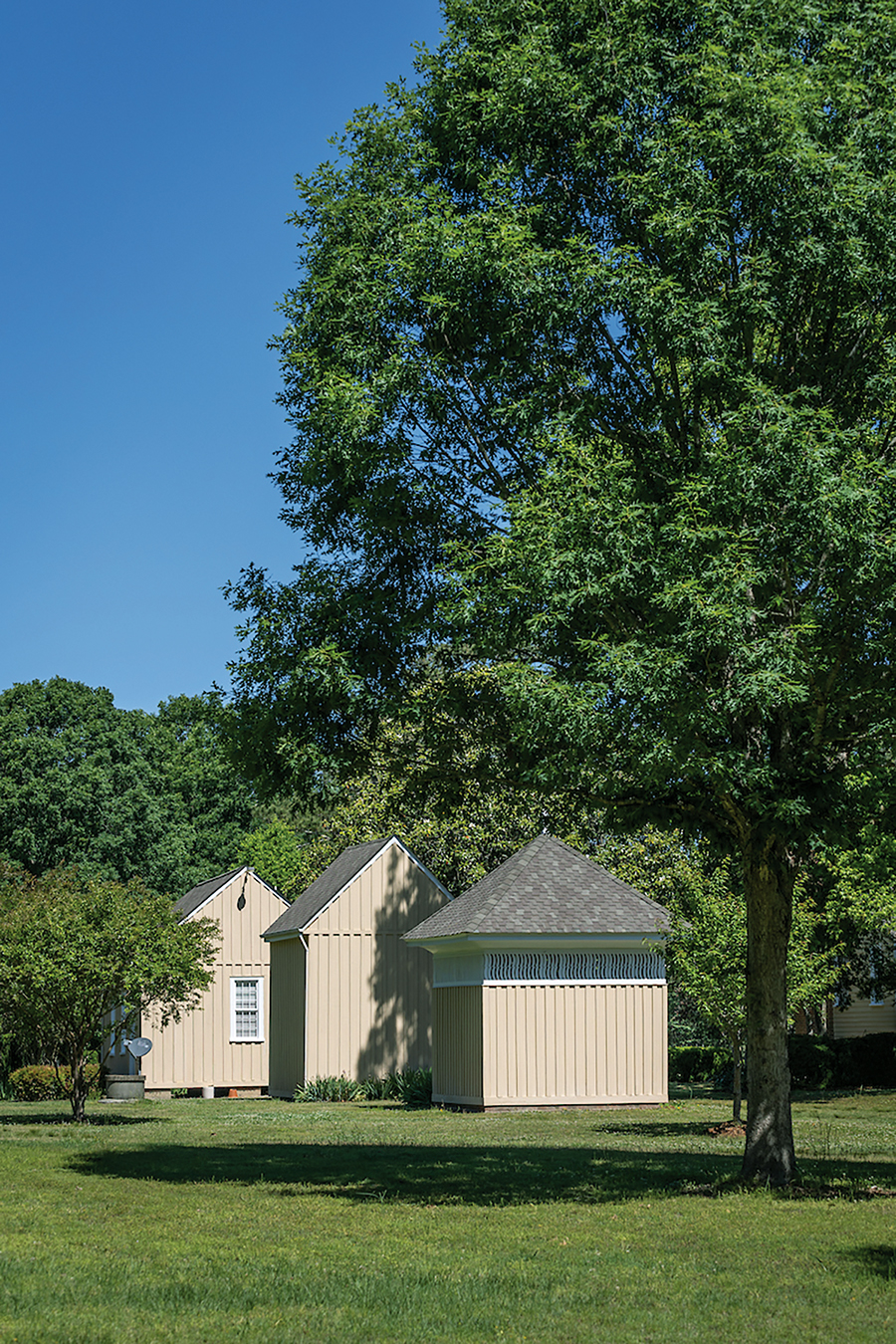
The Hermitage is distinguished further by its extraordinary collection of outbuildings. A kitchen, smokehouse and dairy remain in place where they were built, carefully aligned with almost military precision, and all covered with board-and-batten siding. The dairy, with its plaster-covered cornice and artistically designed vertical louvers, survives as if it was built yesterday. Other outbuildings built in 1842 include an office, a schoolhouse and washhouse.
Charles and Mary Tillery have made the preservation of The Hermitage their life’s work. The property endures not because it has been frozen in time, but because it has been loved, cared for, and understood by those who have called it home. It isn’t only an architectural treasure, it is the rarest of places, one that holds both a place in history and a place in the hearts of a family, hopefully for centuries to come. EB
Samuel Bobbitt Dixon is a graduate of the University of North Carolina at Chapel Hill and the Wake Forest School of Law. He lives in Edenton, where he is a practicing criminal attorney. He is involved with historic preservation on a local, state and national level, and is a member of the Board of the National Trust for Historic Places in Washington, D.C.