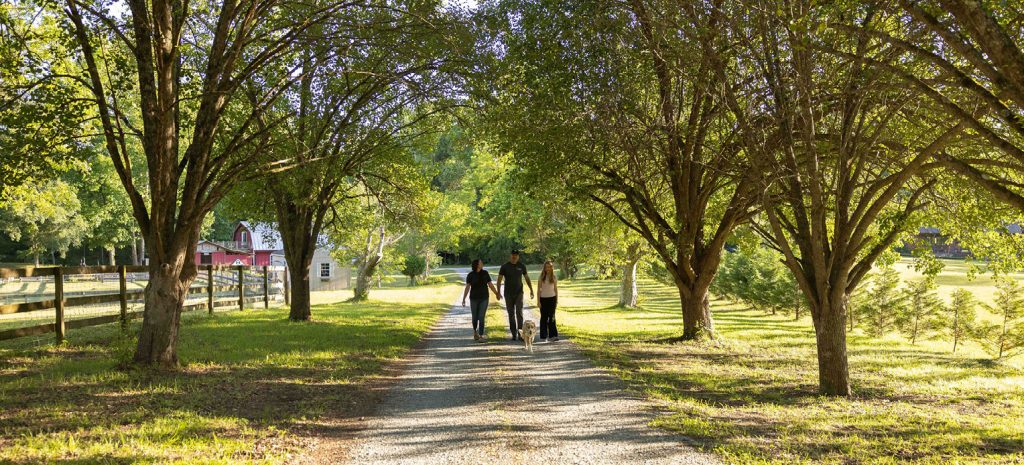
Photographs by Andrew Sherman
Figs are one of the oldest cultivated fruits in the world, grown for more than 11,000 years across the Mediterranean, the Middle East and parts of Asia. They have fed civilizations, appeared in religious texts, and threaded their way through art and folklore as symbols of abundance, enlightenment and quiet resilience.
Today, that same ancient fruit is thriving in an unexpected corner of coastal North Carolina where heat, humidity and sandy soil come together to create a landscape that feels, in its own way, surprisingly aligned with the fig’s long legacy.
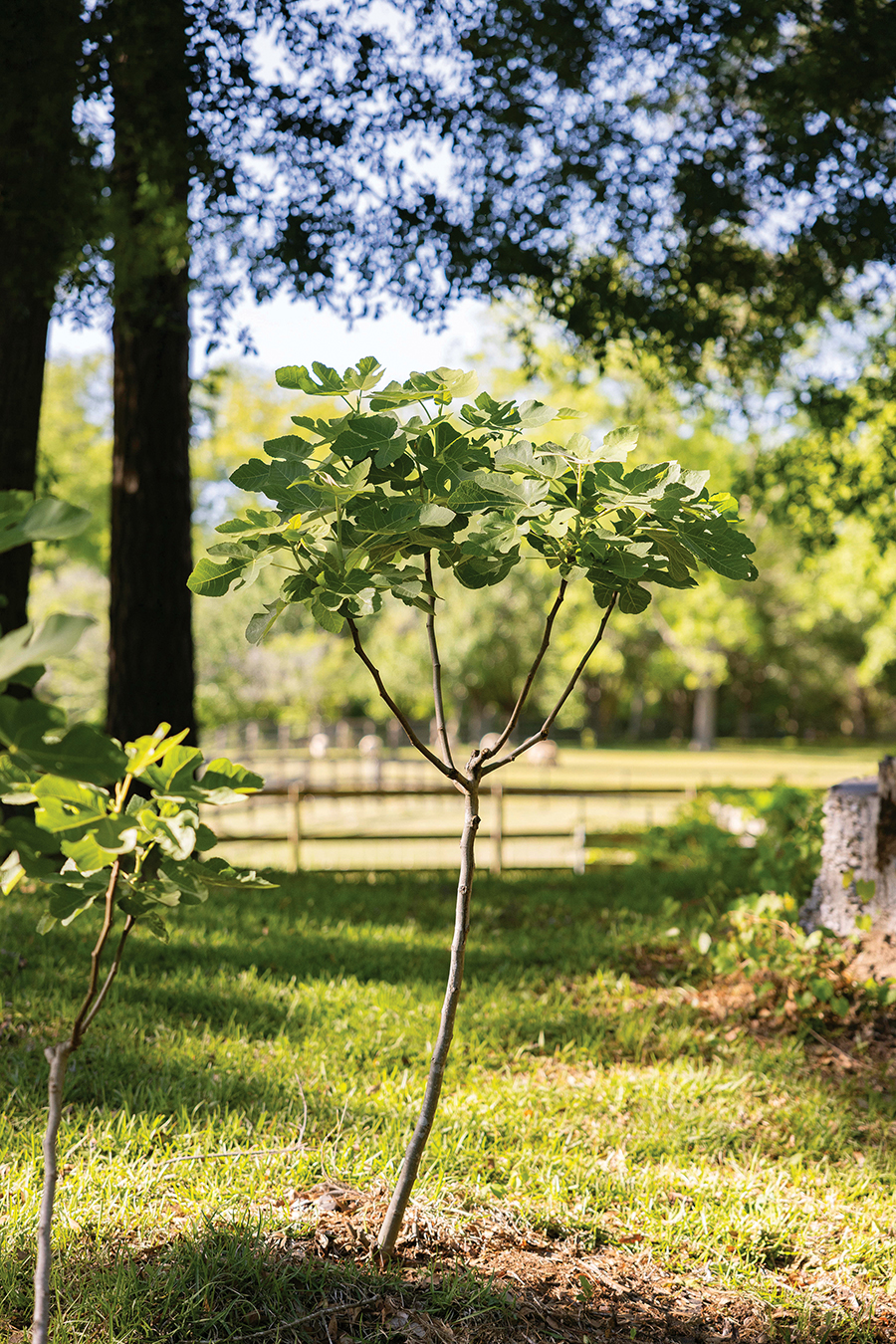
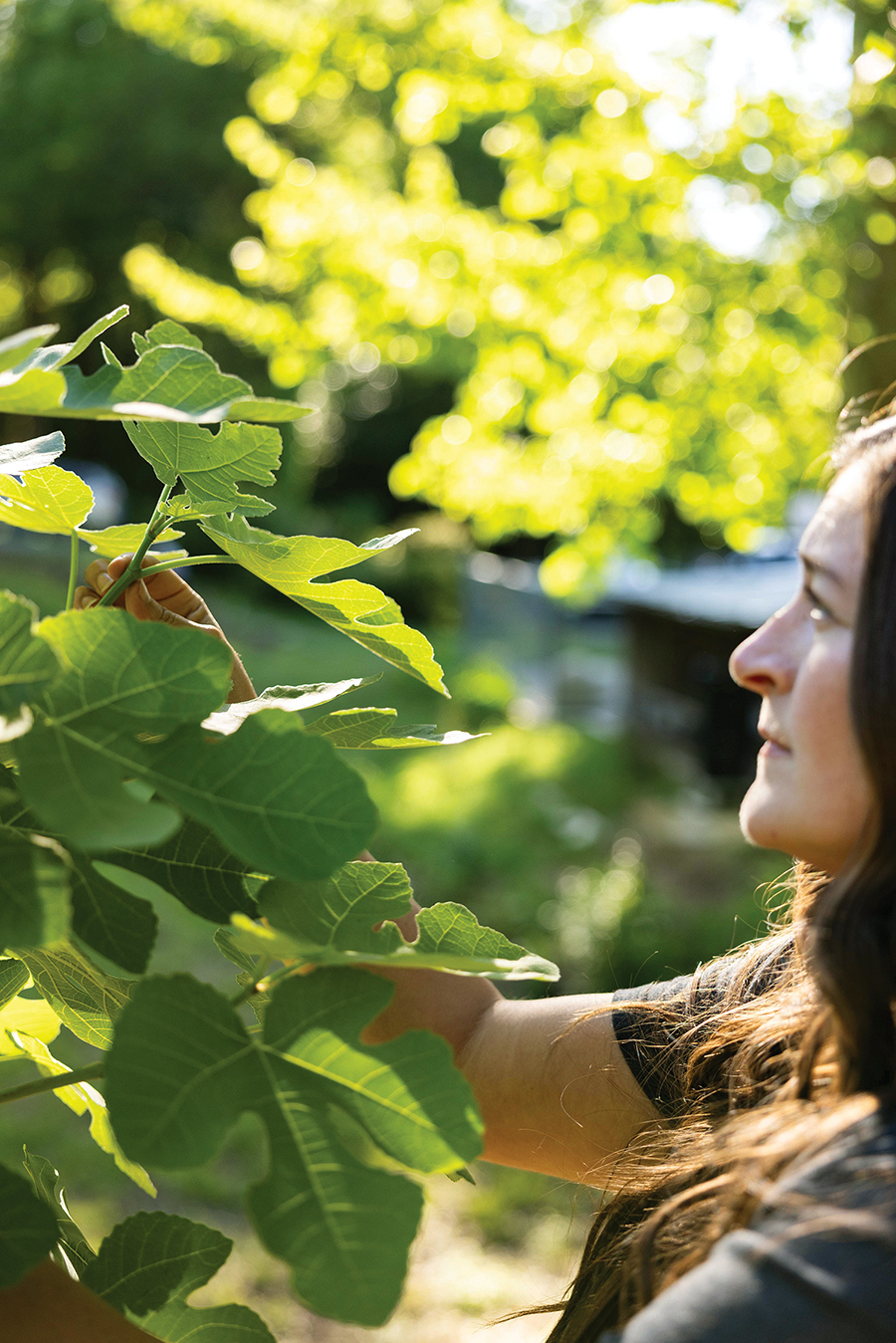
At Honeybird Organic Farm in Castle Hayne, rows of fig trees rise from mineral-rich earth, their broad leaves stretching outward and upward, catching the coastal air and filtering sunlight into shifting patches of shade. In late summer, the fruit arrives in waves. It hangs soft and heavy, skin taut and almost shimmering with ripeness. Each fig carries its own subtle shift in flavor. One leans honeyed and floral, another turns berry-bright, while others deepen into something faintly caramelized depending on variety, weather and the precise moment they are picked.
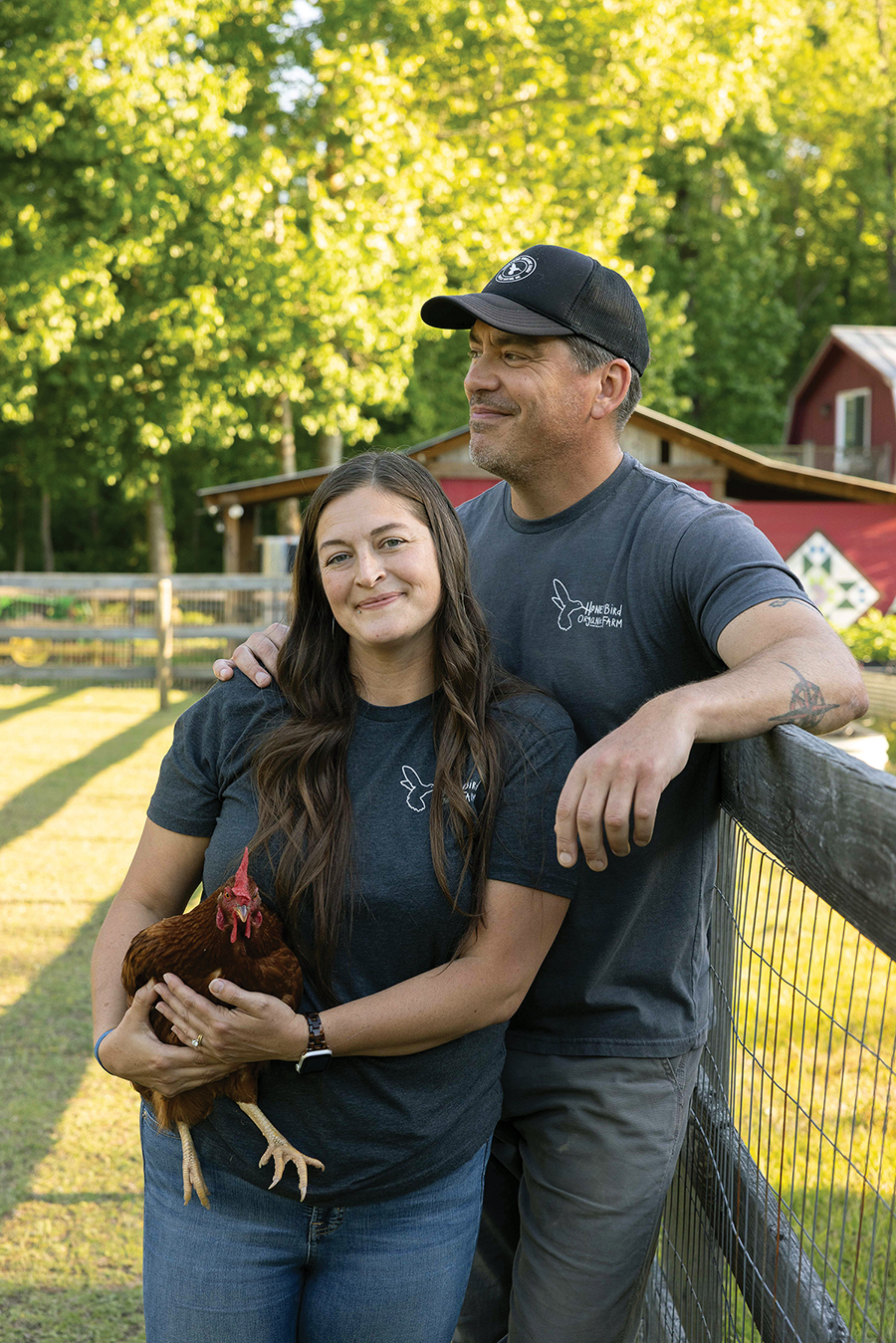
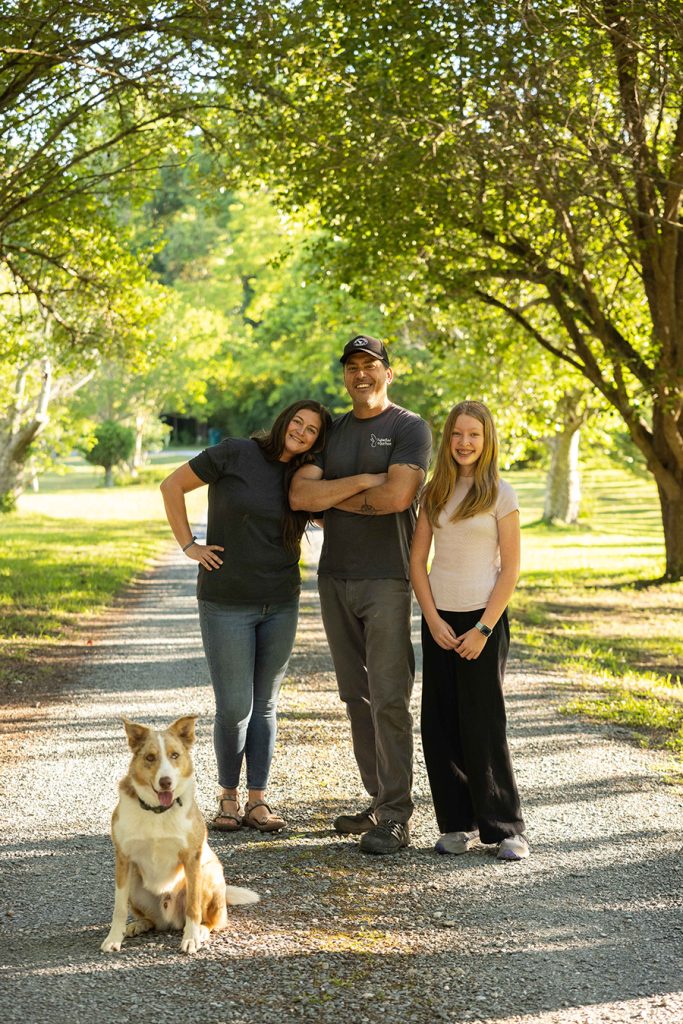
“There is absolutely a mythic quality to figs. It is amazing to think about people enjoying their sweetness as far back as 9400 B.C.,” says Mallory Jacobus, co-owner along with her husband, Ty Jacobus, of Honeybird Organic Farm. Her observation lands less like nostalgia and more like continuity. What grows here is not just a crop, but the continuation of a story that predates even the pine fencing that lines the farm.
Part of what draws growers to figs is their refusal to behave like modern agriculture expects crops to behave. Once established, fig trees do not demand constant intervention. They settle in. They adapt. They persist. That apparent ease, however, is deceptive. The difference between an average fig and an unforgettable one is not defined by effort alone, but by timing. And at Honeybird, timing is everything.
Figs do not ripen after harvest in the way many fruits do. They must be picked at their peak, often within a narrow window that can shift by the hour depending on temperature and humidity. Harvesting too early results in a fruit that lacks depth and sweetness. Waiting too long invites splitting, insects or rapid spoilage.
“There is a rhythm to it,” says Ty. “Once established, fig trees require relatively little maintenance, which makes them a practical and rewarding choice for long-term cultivation. But knowing when to step in and when to leave them alone is what really matters.”
That balance between abundance and restraint has become part of the farm’s guiding philosophy. It is not about controlling the environment as much as it is about understanding it.
Visitors to the farm often arrive with a kind of inherited idea of figs. For many, the fruit exists more as a memory than a lived experience. It is something they remember not as fruit, but as filling, tucked inside a familiar packaged cookie pulled from a childhood lunchbox or eaten as an afternoon snack. What they encounter instead is immediate and surprising.
“Folks tend to get a little nostalgic,” Mallory says. “Recalling a fig tree in their grandparents’ backyard growing up or admitting they’ve only had them in Fig Newton form and never experienced them fresh.”
That first bite becomes a kind of recalibration. The texture alone challenges expectations. A ripe fig is soft, with an interior layered with small seeds that create a slight contrast to the jam-like flesh. The sweetness is complex rather than one-dimensional, shifting across the palate in a way that feels closer to a berry in both flavor and structure.
“The goal is to highlight the importance of texture, ripeness and freshness in every fig,” Ty says. “Careful coordination of harvest timing with delivery ensures the fruit maintains its quality from tree to table.” In that moment, the fruit moves from abstraction to experience. It becomes something tangible and immediate, rooted not in memory but in place.
The orchard at Honeybird is intentionally diverse. Brown Turkey, Celeste, LSU Purple, Italian Honey and Jerusalem figs each occupy their own space within the landscape, selected not only for flavor but for their ability to respond to the demands of coastal North Carolina’s climate.
Brown Turkey and Celeste have proven especially reliable. They produce consistently and tolerate humidity with a resilience that makes them well-suited to the region. LSU Purple offers a deeper, richer flavor profile, while Italian Honey leans lighter and more delicate. Jerusalem figs bring their own unique balance of sweetness and structure.
Over time, something subtle but significant begins to happen. The trees start to reflect their environment through the fruit they produce. As they mature, yields stabilize. Sweetness deepens. Size becomes more consistent. The fruit begins to express not just the variety, but its location.
“It has been rewarding to see how time and environment work together to improve both the quality and character of the fruit,” Mallory says. In this way, the orchard becomes more than a collection of trees. It becomes a conversation between plant and place.
The early years at Honeybird were shaped less by certainty and more by experimentation. Like many small farms, knowledge was built through direct experience, often in response to challenges that could not be fully anticipated.
During early cold snaps, young trees were wrapped in old bedsheets in an effort to protect them from damage. It was a practical solution, improvised and hopeful. After the cold passed, the coverings were removed, and something unexpected was revealed. A small section of one tree that had been left uncovered showed no damage at all.
That moment prompted a shift in perspective. Protection gave way to observation. Instead of assuming what the trees needed, the focus began to move toward understanding how they responded on their own.
Pruning brought its own lessons. Borer beetles left behind fine trails of sawdust in exposed limbs, signaling vulnerability within the tree. The response was not aggressive chemical treatment, but adjustment. Cuts were sealed with 100 percent pine tar, valued for its natural antifungal and antiseptic properties.
What emerges from these experiences is a pattern that continues to define the farm. Trial leads to error. Error leads to response. Response leads to patience.
“Like most growing, it continues to be a hands-on learning experience shaped by trial, error and time,” Ty says.
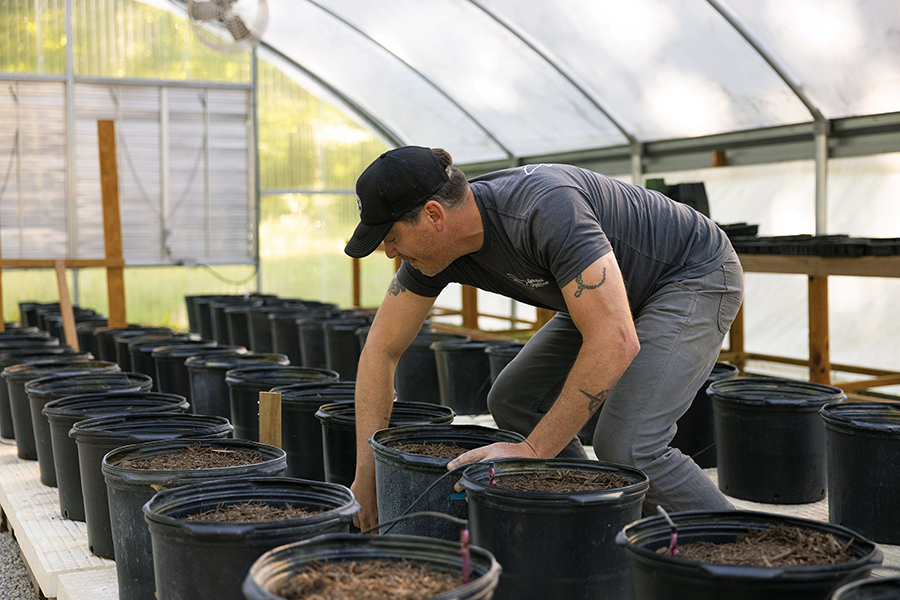
If figs have been the lesson above ground, water has been the lesson below it. “Our access to clean water has truly been a roller coaster,” Ty says. In 2022, polyfluoroalkyl substances (PFAS) were discovered in local well water, disrupting one of the most essential systems on the farm. Greenhouse propagation slowed dramatically as filtration systems were tested, replaced and tested again. What had once been a straightforward process became uncertain and complex. For nearly three years, expansion stalled, not because of soil or climate, but because of infrastructure.
Established trees, including figs and pecans, were largely unaffected. Their deeper root systems and reliance on rainfall allowed them to remain stable. The greenhouse, however, told a different story. Young plants proved far more sensitive, and without consistent access to clean water, growth slowed significantly.
Eventually, a more reliable filtration system was installed, with softened water available as a backup. Plans are now in place for a 1,200-gallon rain cistern, designed to capture and store rainfall for future use. The solution is not just technical; it represents a return to a more direct relationship with the environment.
At Honeybird, the concept of organic farming is approached as an ongoing practice rather than a final label. It is embedded in daily decisions, from soil management to pest control to packaging.
“Organic fig farming begins with the soil and carries through every stage of the tree’s growth,” Mallory says.
No synthetic pesticides or insecticides are used. Instead, solutions are selected for their effectiveness and their compatibility with the surrounding ecosystem. Orange oil is used for ant control. Pine tar seals pruning cuts. U.S. Department of Agriculture-approved fertilizers are applied when necessary, always with attention to long-term soil health.
Even packaging reflects this approach. Recycled materials are prioritized whenever possible, reducing waste while maintaining quality.
Irrigation practices follow the same logic. Rainwater is the preferred source, with systems designed to conserve rather than extract. The goal is not simply to grow crops, but to do so in a way that aligns with the natural cycles already present on the land.
Spend enough time among fig trees and it becomes difficult to separate agriculture from inspiration. There is an inherent symbolism in the way figs grow. The fruit forms deep within the branches, often hidden beneath large leaves, ripening slowly under alternating conditions of warmth and shade. They feel less like something cultivated and more like something discovered.
“There is a sense of continuity in realizing how simple and instinctive the process really is — and how those before us understood it in much the same way,” Mallory says. “Working with figs feels like a connection to a much simpler time, where growth, patience and harvest followed the same natural rhythm they always have.”
Technology has reshaped nearly every aspect of modern agriculture, introducing efficiency, scale and control. Figs, somehow, have not fully agreed to that rewriting. In that way, they serve as a reminder that not all progress comes from acceleration. Some of it comes from staying close to the pace of the natural world.
In a region shaped by heat, humidity and environmental uncertainty, figs offer something unexpectedly steady. They demonstrate that success does not always come from overcoming a place, but from working within it.
The hope is that figs will come to represent a different kind of agriculture in coastal North Carolina — one that values observation over intervention, patience over speed and respect for nature’s rhythm.
“More than anything, it is about showing that meaningful food production doesn’t have to be complicated,” Ty says. “It just has to be thoughtful, consistent and connected to the place it comes from.”
In the end, figs seem to resist over-explanation. They do not ask to be interpreted so much as experienced. When they are at their peak, warm from the tree and soft in the hand, they collapse into sweetness at the first bite. And in that moment, something ancient and immediate meets. EB
Lora Plauche is a food writer and private chef based in Wilmington, North Carolina. She creates meaningful food experiences through private dinners, cooking classes and community-based culinary events. She can be reached at
Lorap@privatechefLP.com.
Honeybird Organic Farm is owned and operated by Mallory and Ty Jacobus. For inquiries, orders or collaboration opportunities, they can be reached at Ty@honeybird.farm.