By Emmie Brooks
Photographs by Jaclyn Morgan
The last train left Little Washington decades ago, but the Atlantic Coast Line depot is stirring again, not with passengers or freight, but with something older. This summer, as America celebrates the 250th anniversary of the Declaration of Independence, history is arriving here, too, pulling into a station that once tethered Washington to the world.
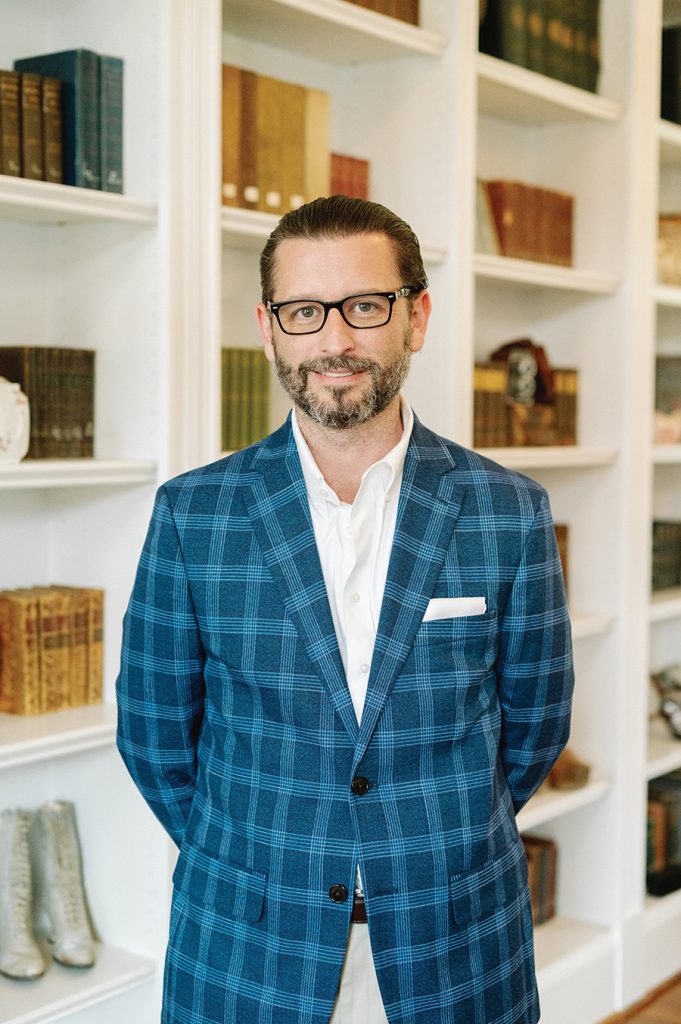
Inside the depot, curator Stephen Farrell walks through the space as if it exists in two timelines at once. He points to the pushbutton light fixtures, the period furniture, the details chosen carefully enough to make visitors feel less like they’re observing history and more like they’ve stepped into it.
“Every detail . . . the design, the colors, the placement, is intentional. What we lack in size, we make up for in the experience,” Farrell says. “I want visitors to feel like they’re stepping back in time, not just learning history, but standing in it.”
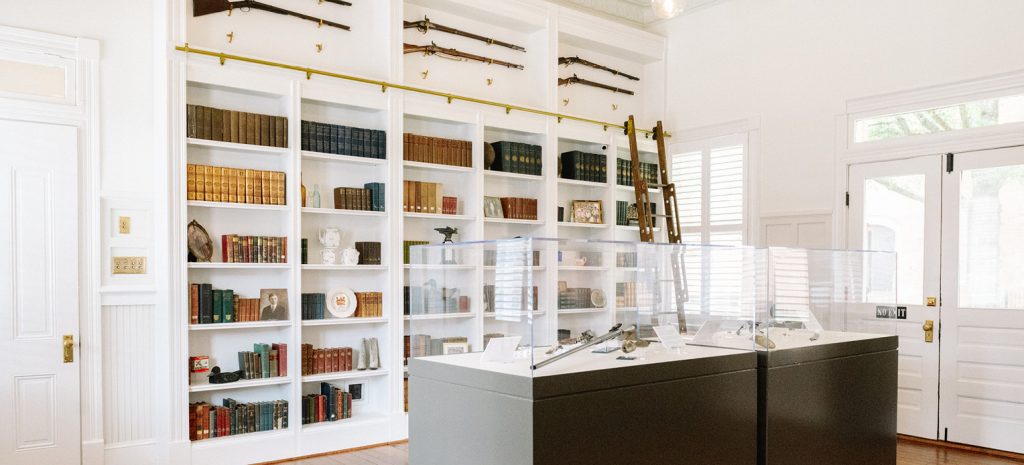
Light filters across brass hardware as the space opens into a research room lined with antebellum portraits. Nothing feels overly staged; the building holds on to its character. Once a threshold of constant movement, it’s now becoming something more permanent.
This summer, Farrell and a network of local donors and preservationists will open the building as Washington’s Museum of the Pamlico, filling it with artifacts that stretch back to the Colonial era. The timing is intentional. With America’s 250th anniversary coinciding with city of Washington’s 250th, the museum positions the town, one of the first named for Gen. George Washington, within a much larger story.
“It has good bones. It’s a beautiful structure that was built in 1904,” Farrell says. “It just fit in terms of the character we were looking for.”
The building itself is a rarity. According to Farrell’s research, only two structures like it are known to exist: one in Dothan, Alabama, and the one in Washington. Built in 1904 as part of the Atlantic Coast Line, the depot served as Washington’s rail connection to the outside world, handling passengers and freight as the town shifted from trade up and down the Tar and Pamlico rivers to rail transport.
It was later renovated in 1976 as a bicentennial project for the Beaufort County Arts Council, then spent years in quieter use as a tourism office, its original structure largely intact but slowly fading into the background of downtown life.
Much of the work inside the depot has been shaped through a close collaboration with Dawson Tyler of Downeast Preservation, a nonprofit preservationist based in Edenton. Together, Farrell and Tyler have worked through the details that don’t always register at first glance — the materials, the finishes, the period-accurate furnishings — trying to rebuild not just a museum, but a sense of time.
“Dawson and I have worked very closely on this. I’ve bounced ideas off him; he’s bounced ideas off me. He and I worked very well together with our concepts for this building,” Farrell says.
That collaboration has extended into nearly every corner of the restoration, from sourcing period furniture to recreating the look and feel of a space meant to reflect the early 20th century without losing the weight of the centuries it now interprets. For Farrell, part of that work is about helping visitors understand just how close the past still is.
“It’s about stepping back in time. If you think about the era of this building, 1904, there were still Civil War veterans around who were 60-70 years old,” he says. “That’s incredible to think about.”
The goal, he adds, is not just interpretation, but immersion. “We want people to be in a time machine,” he says, “hearkening back to the era that you’re learning about.”
That sense of immersion extends beyond the architecture and into what the museum is steadily gathering: objects that continue to surface from across Beaufort County, many of them never before displayed outside private homes or previously hidden away in storage boxes. Farrell says donations have begun to arrive that reach back into the 1700s, carried in by families or uncovered in land that still holds traces of early settlement.
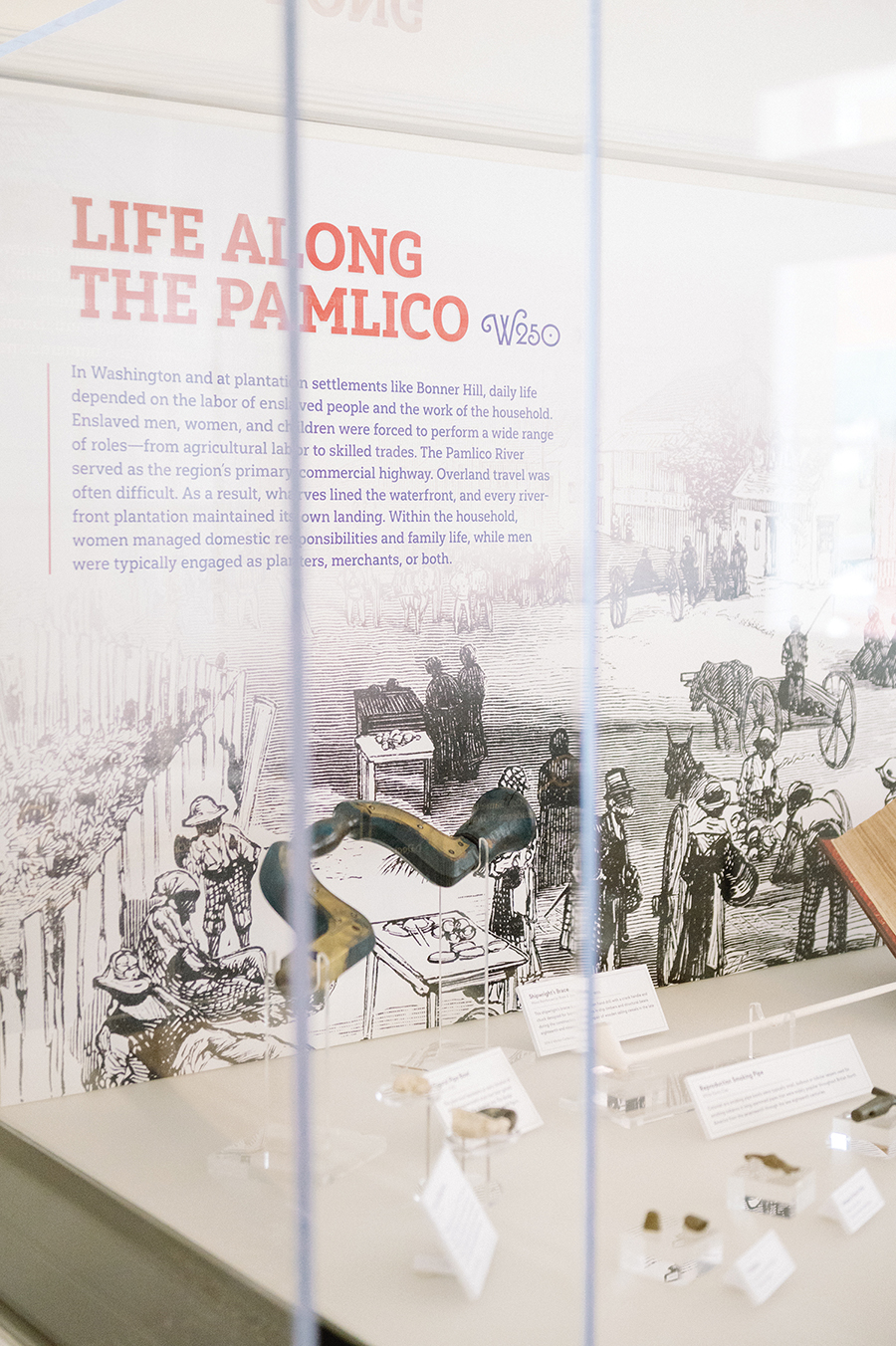
“We’ve taken in artifacts from the Colonial period, things that have been found here, kept here, passed down here,” he says. “Everything will have been donated, found or ground-dug here in the Washington or Beaufort County area — buttons, ceramics, firearms, powder horns — pieces of everyday life that were very much part of this place.”
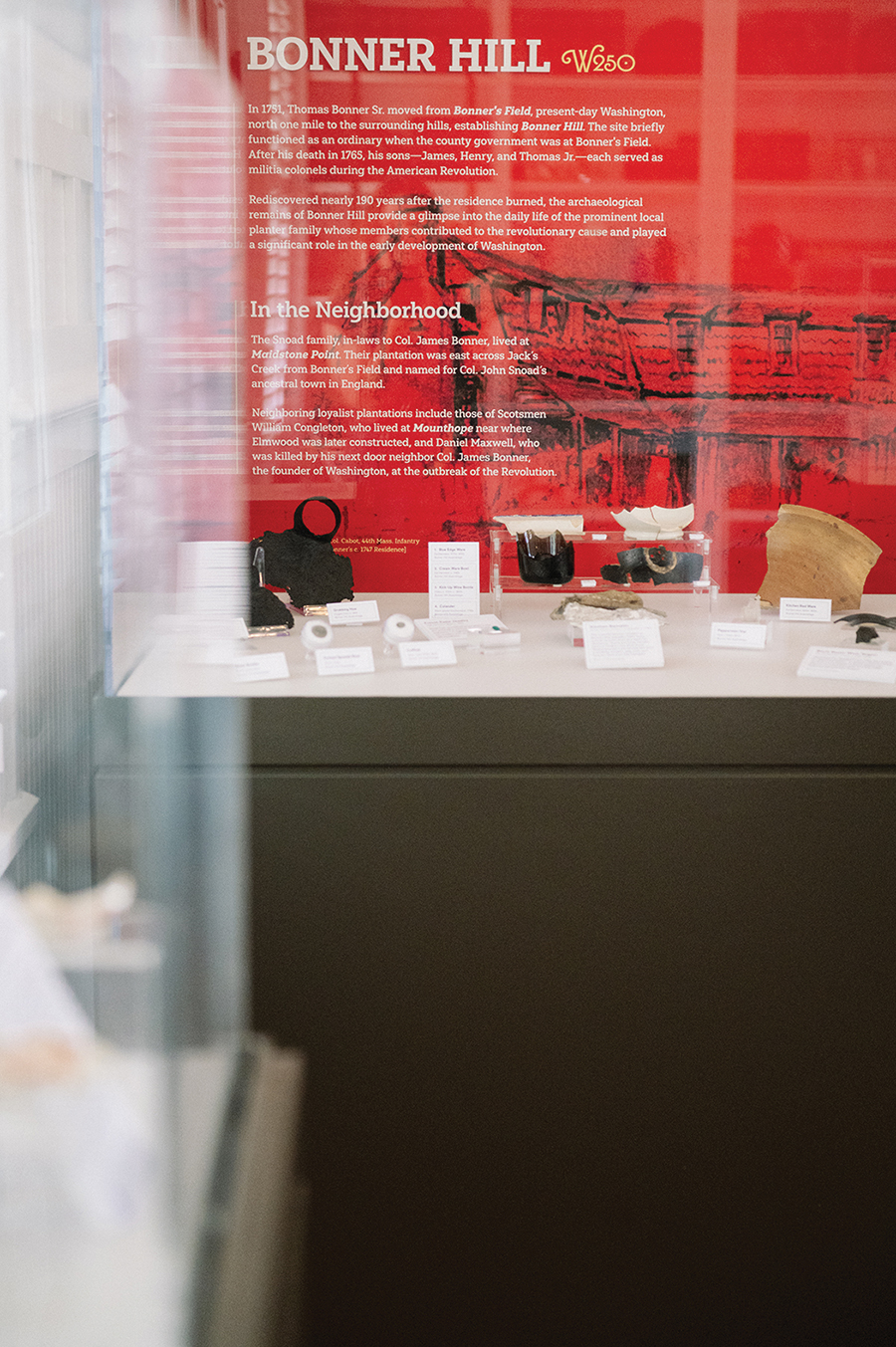
Some of the most striking finds are not necessarily the rarest, but the most personal. Among them is a reconstructed Colonial-era teacup, reassembled after being uncovered at the original home site of the family of the town’s founder.
“They dug the pieces up out of the home site, then pieced it back together to complete a teacup that the founder of the town very well could have sipped from in 1776,” Farrell says. “That’s the kind of incredible history that we have and are trying to show off.”
Beyond the teacups and fragments, the museum is positioning itself as a place where familiar history can be re-examined. Farrell says the goal is not only to preserve what is already known about Washington, but to keep uncovering what has been hidden in plain sight, reshaping how the town understands its own origins.
“There’s a lot that will surprise visitors,” he says. “Modern technology has allowed us to uncover new and exciting stories over the past several years. We’ve proven that this town was created out of a murder . . . the founder of our town murdered his next-door neighbor.”
Farrell says the museum is designed to stay in motion, not remain fixed. Rotating display cases will allow new artifacts and themes to cycle through the space throughout the year, shifting with donations, seasonal programming and visiting collections from across the region. All of 2026, he adds, will be themed around America’s 250th anniversary.
One month might focus on Colonial life in Beaufort County; another could highlight local family archives or traveling exhibits from partner institutions. The idea, he says, is to keep the story active, so that no two visits feel exactly the same.
“I want this to be part of the community and have their involvement because that’s what this history is, it’s the community’s ethos,” he says. “For them to continue to be part of it through volunteering and through our collection management, I think we’ll have something really special.”
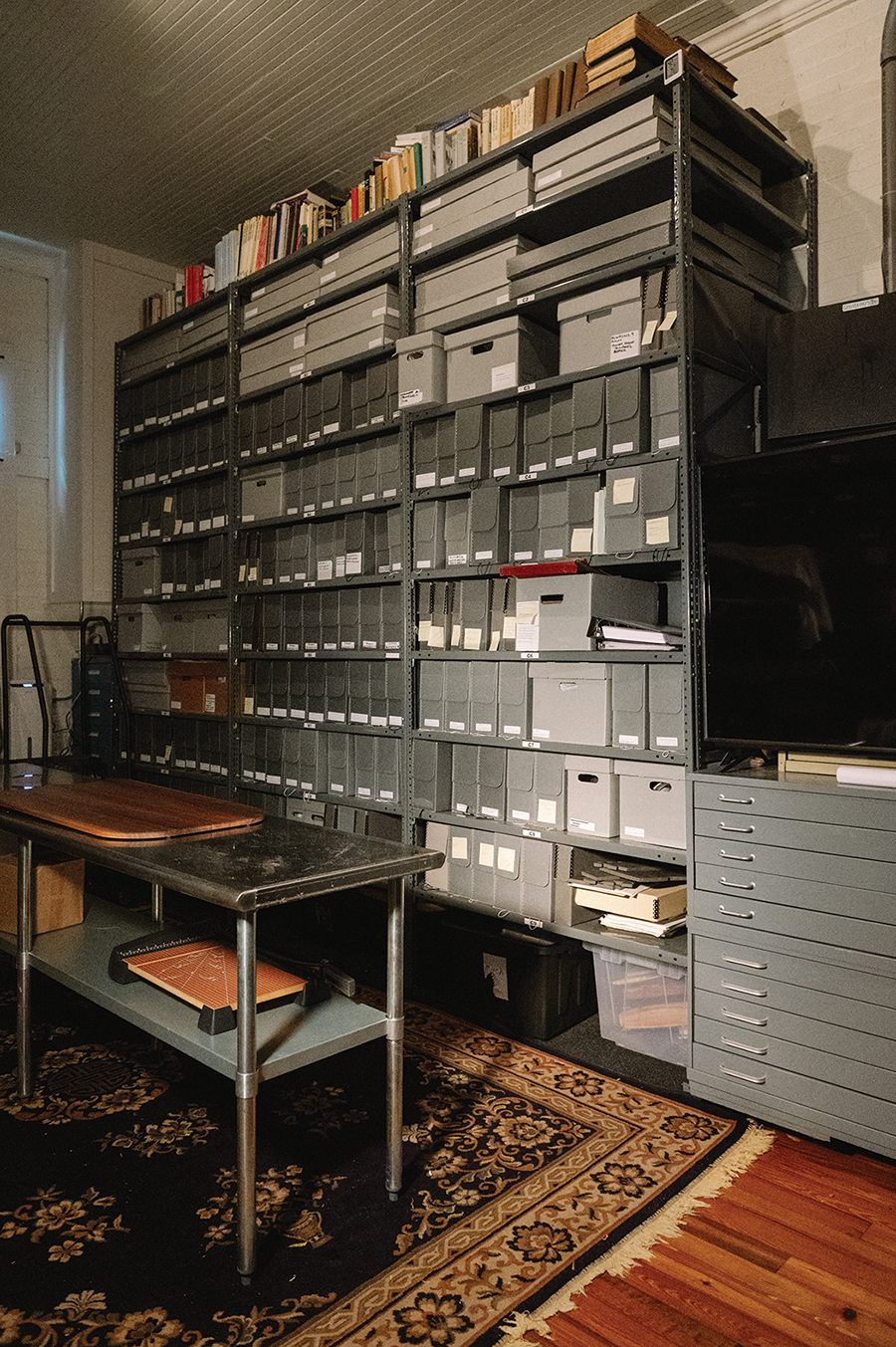
Keeping that kind of rotation in motion, Farrell says, will depend on more than artifacts alone. With a staff of one, the museum is built on a much wider network of support — volunteers, local historians and community members who help shape how the collection is cared for and displayed.
That involvement is already beginning to take shape through local organizations and preservation efforts that have helped make the project possible, including the Historic Port of Washington Project, the George H. & Laura E. Brown Library and Downeast Preservation, alongside support from private donors and other city partners.
The hope, Farrell says, is that the museum becomes more than a destination for visitors; it becomes part of a broader effort to draw people into Washington itself. As heritage tourism continues to grow across Eastern North Carolina, leaders see the museum as one anchor in a larger corridor of history linking Washington with nearby towns like Edenton and New Bern.
Farrell points to the museum’s place within a broader downtown landscape that is increasingly defined by connected historic sites. Along Gladden Street, the Underground Railroad Museum anchors one end of the corridor, while the Pamlico River waterfront leads toward the North Carolina Estuarium at the other, forming what he describes as a kind of heritage loop through the city’s core.
“The more visitors and patrons come through, the more that flows into the community, the restaurants, shops, places to stay,” Farrell says. “Even though the museum is free, it’s an investment in the town. Every time you come to Washington, we hope you not only visit, but visit often, and stay a while.”
He envisions walking tours that move through those points as a single narrative, beginning at one site and ending at another, whether that’s along the river or through downtown streets lined with local businesses that remain part of the town’s everyday life.
The museum isn’t meant to stand alone, but to function as part of a larger journey through the region’s past and present, one that connects Washington to neighboring towns, placing its history on a wider map. In that sense, Farrell says, the old depot is doing what it has always done: receiving people, sending them forward and holding the stories they carry with them long after they’ve left the platform. It is, once again, a place of arrival and departure. EB
Emmie Brooks is a Greenville native and East Carolina University graduate working in editorial marketing. She’s happiest with a good story — or a view of the Pamlico River.